SearchPular para o conteúdo

Lisbon Falls: A Cascading Journey Through Mpumalanga’s History and Wonders

Amid the lush Panorama Route of Mpumalanga, South Africa, lies Lisbon Falls – a majestic 94-metre waterfall regarded as the highest in the province. Tumbling in a dramatic plunge into a deep emerald pool at the base of a forest-clad gorge, Lisbon Falls captivates visitors with its sheer drop, often compared to the height of a 30-storey building, and the frequent rainbows dancing in its misty spray.
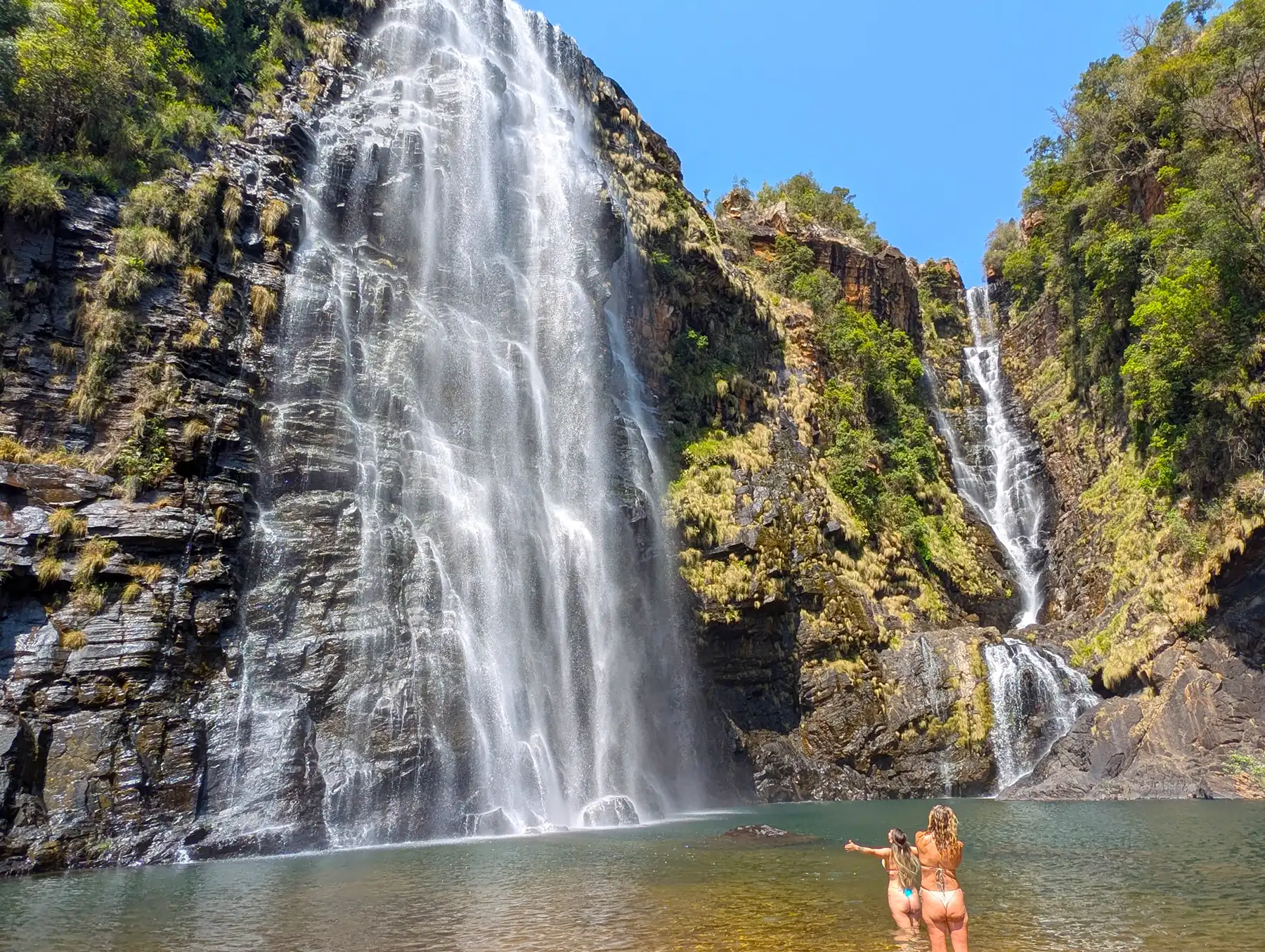
Lisbon Falls cascading into a lush forested gorge along South Africa's Panorama Route near Graskop, Mpumalanga
Lisbon Falls on the Panorama Route near Graskop, Mpumalanga. At 94 metres high, this iconic waterfall combines dramatic scenery, gold-rush history, indigenous heritage, and access to the Blyde River Canyon region.

Yet beyond its breathtaking beauty, this waterfall carries a rich tapestry of history and culture: from ancient indigenous roots and 19th-century gold rush tales to enduring legends and modern-day significance. In this in-depth exploration, we’ll travel through time and terrain to uncover the history of Lisbon Falls and the fascinating facts that make it much more than just a scenic cascade.

💡 Did You Know? The Lisbon Falls Got Its Name From Portugal

Despite being in South Africa, Lisbon Falls was named after the faraway city of Lisbon in Portugal. Homesick gold miners from Europe christened it after their homeland’s capital, reflecting the mix of nationalities drawn by the region’s late-1800s gold rush.

🌿 Nature’s Splendor: More Than Just a Waterfall

The waterfall is surrounded by a bowl of hills and indigenous forest, creating a habitat for unique flora and fauna. Look carefully and you might spot Blyde River proteas, an endemic wildflower usually found only in South Africa’s Cape region, as well as brilliant sunbirds flitting through the misty jungle-like gorge.

A Natural Marvel in the Panorama Route

Lisbon Falls sits along Mpumalanga’s famed Panorama Route, a scenic drive known for its dramatic Drakensberg Escarpment vistas, lush highland forests, and the Blyde River Canyon, the world’s third-largest canyon. The falls are nestled just north of the small forestry town of Graskop, near iconic viewpoints like God’s Window, and a short distance from other renowned cascades such as Berlin Falls and Mac-Mac Falls.

In fact, Lisbon Falls is often one of the first major stops for travellers exploring this famous “land of waterfalls,” as few regions in Southern Africa can match the concentration of waterfalls found here. The surrounding landscape combines rugged mountain scenery, indigenous forests, and deep river valleys that have captivated visitors for generations.

Geologically, Lisbon Falls owes its existence to the forces that shaped the Drakensberg Escarpment. As the ancient supercontinent Gondwana broke apart some 180 million years ago, the landmass that became southern Africa uplifted, creating a steep escarpment edge between the high plateau and the lower plains.

Over millions of years, rainfall fed numerous rivers that cascaded over this abrupt drop, carving spectacular gorges and waterfalls. Lisbon Creek, also known as the Lisbon River, flows through the highlands until it reaches a hard-rock precipice, where it plunges nearly 100 metres into a verdant ravine below.

This sudden descent forms what geologists classify as a plunge waterfall, meaning the water free-falls without continuously touching the cliff face before crashing into the pool below. During periods of high flow, the stream often spreads into multiple channels, creating a twin or even triple waterfall effect that glimmers with rainbows in the spray.

The result is one of South Africa’s most photogenic natural landmarks—a dramatic meeting of water, rock, forest, and sky that showcases the immense geological forces responsible for shaping the Panorama Route over millions of years.

Lisbon Falls is renowned for its raw, cinematic beauty, often cloaked in billowing mist that nourishes lush vegetation on the cliffside. Visitors enjoying the view from the lookout platform have described the scene as something out of Jurassic Park, with a sense of primeval wilderness surrounding the waterfall’s thundering curtain of water. Rainbows frequently form in the spray, adding to the enchantment.

The waterfall’s setting is exceptionally photogenic. It plunges into a deep jade-colored pool framed by rugged rocks and fringed by emerald forests. During the summer rainy season, Lisbon Falls can broaden into three or four separate ribbons of water fanning across the semi-circular cliff before rejoining below. This ever-changing display highlights the living, dynamic character of the landscape and how dramatically it transforms with the seasons.

Ancient Origins: Indigenous Heritage of the Area

Long before any European ever set eyes on Lisbon Falls, the escarpment highlands were home to indigenous African peoples whose presence remains etched into the landscape. The earliest known inhabitants were San (Bushman) hunter-gatherers who roamed these mountains thousands of years ago.

While they left no written records, they created delicate red-ochre rock paintings in local caves and overhangs, depicting hunters, wildlife, and ceremonial scenes. Stone tools and rock art sites found throughout Mpumalanga stand as enduring reminders that human communities experienced these waterfalls and canyons long before recorded history, often attaching spiritual significance to dramatic natural features.

Around the 5th century CE, Bantu-speaking agricultural communities settled throughout the region. Archaeological discoveries such as the famous Lydenburg Heads—terracotta masks found west of the falls—reveal a sophisticated Iron Age society that flourished approximately 1,500 years ago. These communities cultivated crops, raised cattle, and produced iron tools, taking advantage of the fertile soils and dependable water sources of the escarpment.

Between the 1500s and early 1800s, the Kingdom of Bokoni, associated with Sotho-Tswana-speaking peoples, thrived throughout the Mpumalanga highlands. The Bokoni engineered extensive stone-walled terraces and settlements on mountain slopes, many of which can still be seen today. These remarkable agricultural systems enabled cultivation on steep terrain while supporting large cattle herds, demonstrating a highly organized pre-colonial society.

The early nineteenth century brought the turmoil of the Mfecane, a period of warfare and migration across southern Africa. Oral traditions recount how Chief Lesisi of the MaPulana people sheltered his followers in caves near Mac-Mac Falls during the 1820s to escape regional conflict. Such stories remind us that the waterfalls of the escarpment were more than scenic landmarks—they also served as refuges, gathering places, and important markers within indigenous cultural landscapes.

A Waterfall Born of the Gold Rush

Lisbon Falls earned its name during the dramatic transformation of the Mpumalanga highlands in the late nineteenth century. In 1873, the discovery of gold near Mac-Mac Falls and Pilgrim’s Rest triggered South Africa’s first major gold rush. Within months, more than 1,500 prospectors and fortune-seekers from around the world flooded into the surrounding valleys, rapidly converting remote wilderness into bustling mining camps.

Among these newcomers were European miners, including Portuguese prospectors who carried memories of their homeland to southern Africa. Along with their mining equipment, they brought familiar place names that would become permanently embedded in the region’s map.

It was during this era of gold fever that Lisbon Falls received the name it bears today. The waterfall lies on what was once known as Farm Lisbon, a property named by a Portuguese immigrant who had settled in the region. Homesick for Portugal’s capital city, he named the nearby stream Lisbon Creek. Over time, that name naturally extended to the dramatic waterfall created by the creek.

Similar stories can be found throughout the Panorama Route. Berlin Falls, just a few kilometres away, was named by German miners longing for home, while Mac-Mac Falls acquired its distinctive name because of the large number of Scottish prospectors with surnames beginning “Mac.” According to local accounts, some of these miners even used dynamite in their search for gold, splitting the original waterfall into the twin cascades visible today.

The influx of miners permanently altered the geography and identity of the region. Settlements such as Sabie, Pilgrim’s Rest, and Graskop expanded rapidly as supply hubs serving the growing mining communities. Ox-wagon routes carved through the escarpment became the foundations of modern scenic roads that now form parts of the Panorama Route.

Lisbon Falls quickly emerged as one of the area's most memorable natural landmarks. For prospectors, traders, transport riders, and settlers, the waterfall was both a place of awe and a practical navigation point amidst the rugged frontier landscape.

Life in the gold rush era combined hardship, danger, and adventure. The legendary South African story Jock of the Bushveld by Sir Percy FitzPatrick is set within this very region. FitzPatrick travelled these escarpment routes during the 1880s as a transport rider supplying mining camps while accompanied by his faithful dog, Jock. It is easy to imagine pioneers pausing at Lisbon Falls to refill water barrels, rest their oxen, or simply admire the magnificent scenery before continuing their journeys between the interior and the port of Delagoa Bay, today known as Maputo.

Lisbon Falls Through Time

  • c. 1500s: Stone-Walled Settlements of Bokoni

    Sotho-Tswana farmers build extensive stone terraces in the Mpumalanga highlands, evidence of a thriving indigenous civilization long before European arrival.

  • 1873: Gold Discovered in the Region

    Pandemonium strikes as rich alluvial gold is found near Mac-Mac Falls and Pilgrim’s Rest, sparking South Africa’s first major gold rush and attracting thousands of prospectors.

  • Late 1870s: Lisbon Falls Named by Gold Prospector

    The waterfall is christened “Lisbon Falls” after Lisbon Creek and Lisbon Farm, so named by a Portuguese prospector nostalgic for his homeland’s capital.

  • 1960s–80s: Conservation Efforts

    The scenic Blyde River Canyon area around Lisbon Falls is protected through the creation of provincial nature reserves, preserving the falls and surrounding ecosystems.

  • 1990s & Beyond: Tourism Boom

    Post-apartheid, Mpumalanga promotes the Panorama Route worldwide. Lisbon Falls becomes a highlight for tourists seeking natural beauty paired with rich history, as part of an emerging eco-tourism and cultural heritage trail.

From Frontier Landmark to Tourism Icon

As the rush for gold subsided near the turn of the 20th century, the area’s focus began to shift. Some prospectors moved on as larger gold discoveries were made elsewhere, while others stayed and helped shape the next chapter of the region’s development.

By the early 1900s, formal mining around Pilgrim’s Rest was declining, and many settlers turned to forestry. Vast stands of pine and eucalyptus were planted to replace indigenous trees that had been cut for mining timber, construction, and fuel. The hills around Sabie and Graskop soon became part of one of the world’s largest man-made forest regions — a landscape still clearly visible to travellers approaching Lisbon Falls today.

Throughout the mid-20th century, conservationists and government authorities increasingly recognized the exceptional natural scenery of the Blyde River Canyon and its surrounding waterfalls. Between the 1960s and 1980s, large sections of the region, including areas near Lisbon Falls, were declared protected nature reserves. These conservation measures helped preserve the dramatic cliffs, indigenous vegetation, river systems, and biodiversity that make the Panorama Route so distinctive.

This protection also helped prepare the way for the tourism boom that followed South Africa’s political transition in the 1990s. After the end of apartheid in 1994, domestic and international tourism to Mpumalanga's scenic wonders grew rapidly. The Panorama Route, once made up of rough wagon tracks used by explorers, traders, and miners, became a fully developed tourism route with paved roads, lookout points, parking areas, and safety railings.

Today, Lisbon Falls is celebrated not only as a natural spectacle but also as a cultural-historical landmark within the province known as “the Place of the Rising Sun.” The name Mpumalanga, used in local languages including SiSwati and Zulu, reflects the region’s position in eastern South Africa, where the sun rises over escarpments, forests, valleys, and lowveld plains.

The waterfall now attracts thousands of visitors each year, drawn by its height, beauty, accessibility, and connection to the broader story of the Panorama Route. For many travellers, a stop at Lisbon Falls becomes more than a photo opportunity. Tour guides often turn the viewpoint into a brief history lesson, explaining how the names Lisbon, Berlin, and Mac-Mac reflect the cosmopolitan mix of fortune-seekers who arrived during the gold rush.

At nearby craft stalls, village markets, and cultural stops, descendants of local Mapulana and Swazi communities continue to share aspects of the region’s living heritage with visitors. Handcrafted goods, storytelling, and cultural performances help connect the waterfall’s natural drama with the human histories that have unfolded across the Mpumalanga escarpment for centuries.

In this way, Lisbon Falls has evolved from an indigenous landmark and frontier reference point into one of Mpumalanga’s most beloved tourism icons — a place where geology, ecology, gold rush history, and local culture all converge in a single unforgettable viewpoint.

Myths, Legends, and Fascinating Facts

While Lisbon Falls itself does not have a singular famous legend attached to it, the waterfall shares in the folklore-rich atmosphere of the Panorama Route. Across the escarpment, local stories have long linked waterfalls, caves, and forests with mystery, spirits, and hidden worlds beyond ordinary sight.

One nearby example is Bridal Veil Falls, where local folklore tells of fairies dancing in the mist on moonlit nights. Although no equivalent fairy tale is firmly associated with Lisbon Falls, its permanent veil of spray, luminous rainbows, and secluded forest setting make it easy to understand how such stories emerge from the landscape.

The region's gold rush history has also inspired tales of hidden treasure. The enduring legend of the Kruger Millions—a supposed cache of gold hidden during the Anglo-Boer War—continues to fuel speculation among treasure hunters. Some enthusiasts have suggested that caves and remote valleys near the escarpment’s waterfalls could conceal long-lost riches, though no evidence has ever confirmed these theories. Nevertheless, such stories add an extra layer of intrigue to an already captivating landscape.

🏆 A Record-Breaker

Lisbon Falls stands approximately 94 metres (308 feet) tall, making it the highest waterfall in Mpumalanga and one of the tallest waterfalls in South Africa. Only a handful of waterfalls, including the renowned Tugela Falls, exceed its impressive height.

🌊 A Multi-Strand Spectacle

Although classified as a plunge waterfall, Lisbon Falls frequently divides into two parallel streams after rainfall. During exceptionally wet periods, visitors may witness three or even four ribbons of water cascading side-by-side over the cliff face.

😊 Tributary of the “Happy River”

Lisbon Creek feeds into the famous Blyde River. The name Blyde means “happy,” a reference to the joyful reunion of Voortrekker explorers with companions once feared lost. Nearby lies the Treur River, meaning “mourning,” creating one of South Africa’s most evocative geographical stories.

🦅 Wildlife at the Waterfall

The falls form part of the greater Blyde River Canyon ecosystem. Visitors may spot agile klipspringers on rocky ledges, soaring Cape vultures riding thermal currents, playful baboons, and on very rare occasions, even a leopard moving silently through the surrounding forests.

🚗 Enduring Tourism Appeal

Lisbon Falls has captivated travellers for generations. As South Africa's road-trip culture expanded during the twentieth century, the Panorama Route became a favourite destination for families, photographers, and international visitors. Today, the waterfall remains a must-see attraction, often combined with visits to Pilgrim’s Rest, God’s Window, and the Blyde River Canyon. Responsible management and entrance fees help maintain facilities, viewpoints, and pathways so future generations can continue to enjoy this remarkable site.

Conclusion

Lisbon Falls’ thundering waters have carved more than a geological landmark—they have helped shape a story spanning thousands of years. From the earliest hunter-gatherers and agricultural societies who lived among these mountains to the prospectors who arrived during the gold rush and gave the waterfall its European name, each generation has left its mark upon the landscape.

Standing before the roaring cascade today, visitors can appreciate far more than its impressive height. The waterfall represents the immense forces that shaped the Drakensberg Escarpment, the cultural heritage of indigenous communities, the ambitions of nineteenth- century fortune-seekers, and the modern conservation efforts that protect the region's natural treasures.

Lisbon Falls is therefore both a natural wonder and a living monument to Mpumalanga’s rich history. Its mist-filled gorge, rainbows, forests, and dramatic plunge continue to inspire awe, while the stories connected to the landscape provide a deeper appreciation of the people who have called this region home.

Whether you arrive for the spectacular views, the fascinating history, or the enduring legends of the Panorama Route, one thing is certain: Lisbon Falls delivers a cascade of wonders that no visitor easily forgets.

Frequently Asked Questions About Lisbon Falls

Lisbon Falls is located near Graskop in Mpumalanga, South Africa, along the famous Panorama Route and close to attractions such as God's Window, Berlin Falls, and the Blyde River Canyon.

Lisbon Falls has a vertical drop of approximately 94 metres (308 feet), making it the tallest waterfall in Mpumalanga and one of the tallest waterfalls in South Africa.

The waterfall was named after Lisbon Creek and Farm Lisbon, which were named by a Portuguese prospector who longed for his homeland's capital city, Lisbon, during the 19th-century gold rush.

Yes. Lisbon Falls is one of the most visited attractions on the Panorama Route and is often included alongside God's Window, Bourke\’s Luck Potholes, Berlin Falls, Mac-Mac Falls, and the Blyde River Canyon.

Lisbon Falls is classified as a plunge waterfall, meaning the water drops freely over the cliff edge before crashing into the pool below without continuously flowing along the rock face.

The waterfall is impressive year-round, but the summer rainy season (roughly November to March) typically produces the strongest flow and the most dramatic multi-strand cascade effect.

Yes. The constant mist created by the waterfall frequently produces beautiful rainbows, particularly during sunny mornings and afternoons.

Yes. A modest entrance fee is usually charged to help maintain the viewing areas, visitor facilities, and surrounding conservation efforts.

Most visitors spend between 20 and 45 minutes enjoying the viewpoints, taking photographs, and learning about the waterfall's history and geology.

Yes. The falls are easily accessible from the parking area and are a popular stop for families, photographers, and travellers exploring the Panorama Route.

Visitors may spot klipspringers, Cape vultures, baboons, and a variety of birdlife. The surrounding forests and canyon ecosystems support a rich diversity of plants and animals.

The area was first inhabited by San hunter-gatherers and later by Bantu-speaking agricultural communities, including the Bokoni civilization and the ancestors of today's Mapulana people.

The discovery of gold in nearby Pilgrim's Rest and Mac-Mac in 1873 brought thousands of prospectors to the region and led directly to the naming of Lisbon Falls and many other local landmarks.

These names reflect the international mix of gold prospectors who settled here during the gold rush. Berlin Falls was named by German miners, while Mac-Mac Falls was named after Scottish miners.

The waterfall lies within the broader Blyde River Canyon conservation area, which protects important ecosystems, wildlife habitats, and scenic landscapes.

While no major legend is directly linked to Lisbon Falls, the surrounding Panorama Route is rich in folklore, hidden-treasure stories, and tales of mysterious waterfalls and mountain spirits.

The deep pool reflects surrounding vegetation and rock formations, creating the striking jade-green colour that makes Lisbon Falls particularly photogenic.

The waterfall was formed by millions of years of erosion along the Drakensberg Escarpment, where Lisbon Creek flows over resistant rock before plunging into a deep gorge.

Nearby attractions include God's Window, Berlin Falls, Mac-Mac Falls, Bourke's Luck Potholes, Three Rondavels, the Blyde River Canyon, Graskop Gorge Lift, and Pilgrim's Rest.

Lisbon Falls combines spectacular scenery, fascinating gold-rush history, indigenous heritage, unique geology, diverse wildlife, and easy accessibility, making it one of the Panorama Route's most rewarding and memorable stops.